
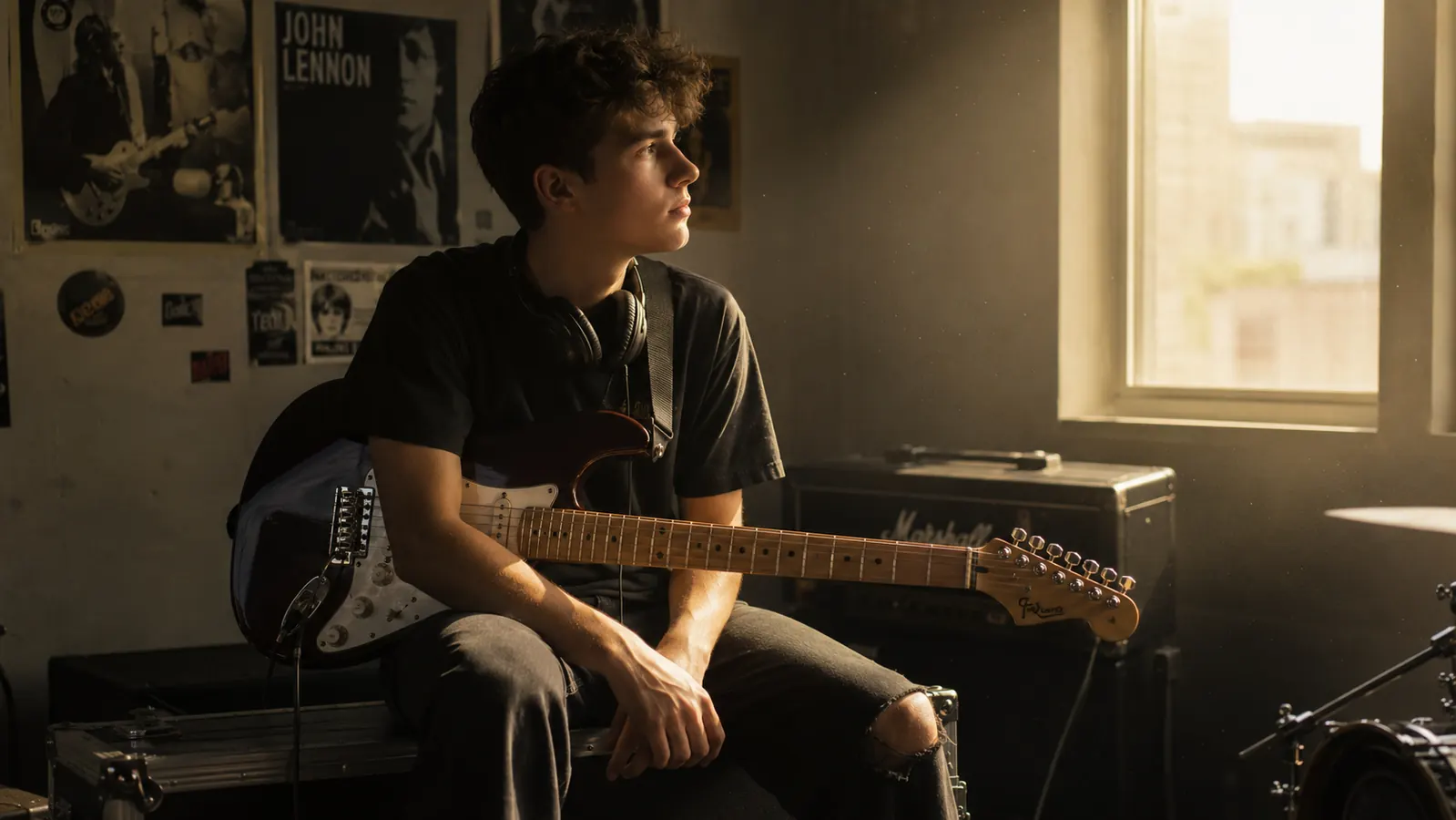
Marcus was sixteen, had been playing electric guitar for four years, and was absolutely sure he was ready for his first real gig. His tone was sharp, his riffs were memorized, and he had every song on the setlist down cold. There was exactly one problem. He had never actually heard himself.
Not the way an audience would hear it, anyway. He practiced with his amp up a little too loud, because the cabinet against his legs felt like progress, and when you play loud, what you feel through the strings and the floor is not what anyone hears a few feet away. I had been trying to get this across for months. Lectures did nothing. Charts did nothing. Then one Tuesday afternoon I set up the small recording rig I keep in the teaching studio, the one built around a Focusrite Scarlett Solo, and we found out together.
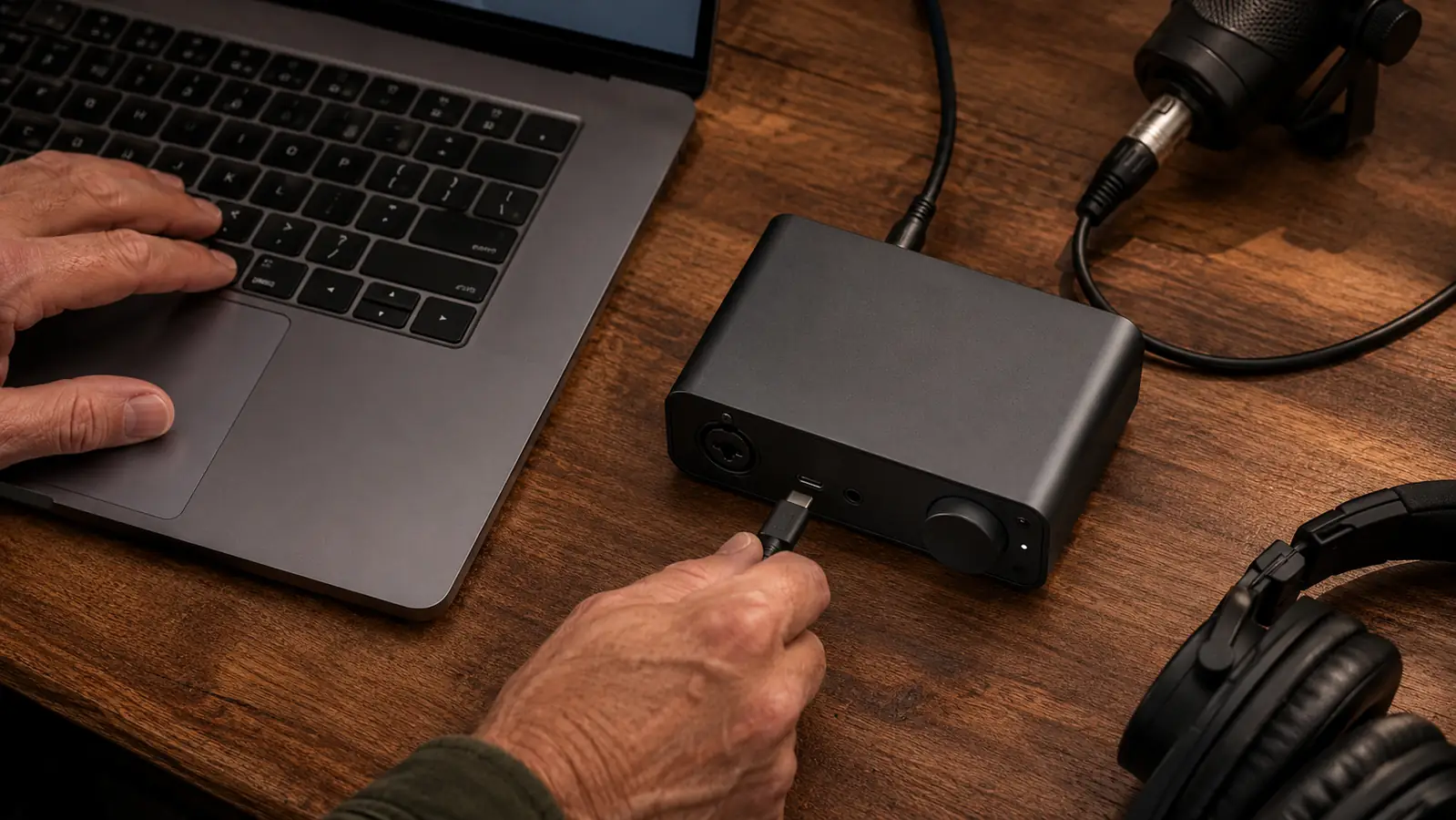
I record students all the time. It is the single most valuable thing I do across a week of lessons, and it costs me almost nothing. One microphone into the Scarlett Solo, a laptop, free recording software on every machine in the studio, and two pairs of headphones. Press record, play, stop, and then the honest part begins. I have never once had a student listen back and say they sounded better than they thought. It has always been the other way around.
Marcus played the intro to a song he had been working on for three weeks. He got his notes, more or less, and set the guitar down with that half-smile he wears when he thinks he has done a thing. Then I pressed play.
His face did something I have seen a hundred times and never get tired of. Confusion first, then a slow dawning, then the quiet truth: 'That's what I really sound like?' His timing was all over the place. The string noise between chords was louder than the chords themselves. The little fills he was proudest of landed late every single time, because he was playing them with his hands instead of counting with his feet. The song he knew inside and out was half as clean as he believed.
He practiced that song for three weeks and never once heard what I heard in ten seconds of playback.
Hear Yourself the Way an Audience Will
A week of honest recordings will teach you more about your playing than a month of practice. The Focusrite Scarlett Solo is the interface I hand to students when they are ready to listen.
Amazon Check Today's Price on Amazon →Here is what nobody tells a young guitarist. Your amp lies to you. Your memory lies to you. Even the room lies to you. The only honest instrument in the whole setup is a recording, and a phone recording is not honest either, because the phone microphone squashes your sound and adds its own version of the story. A real interface, even a compact one, is the difference between hearing an idea of yourself and hearing yourself. That gap is where players at every level waste whole years.
Marcus went home that afternoon and asked his parents about the Scarlett Solo. Not because I showed him a spec sheet. He wanted to hear himself again. That is the whole pitch, right there. I did not have to sell anything. The recording did the selling in about sixty seconds.
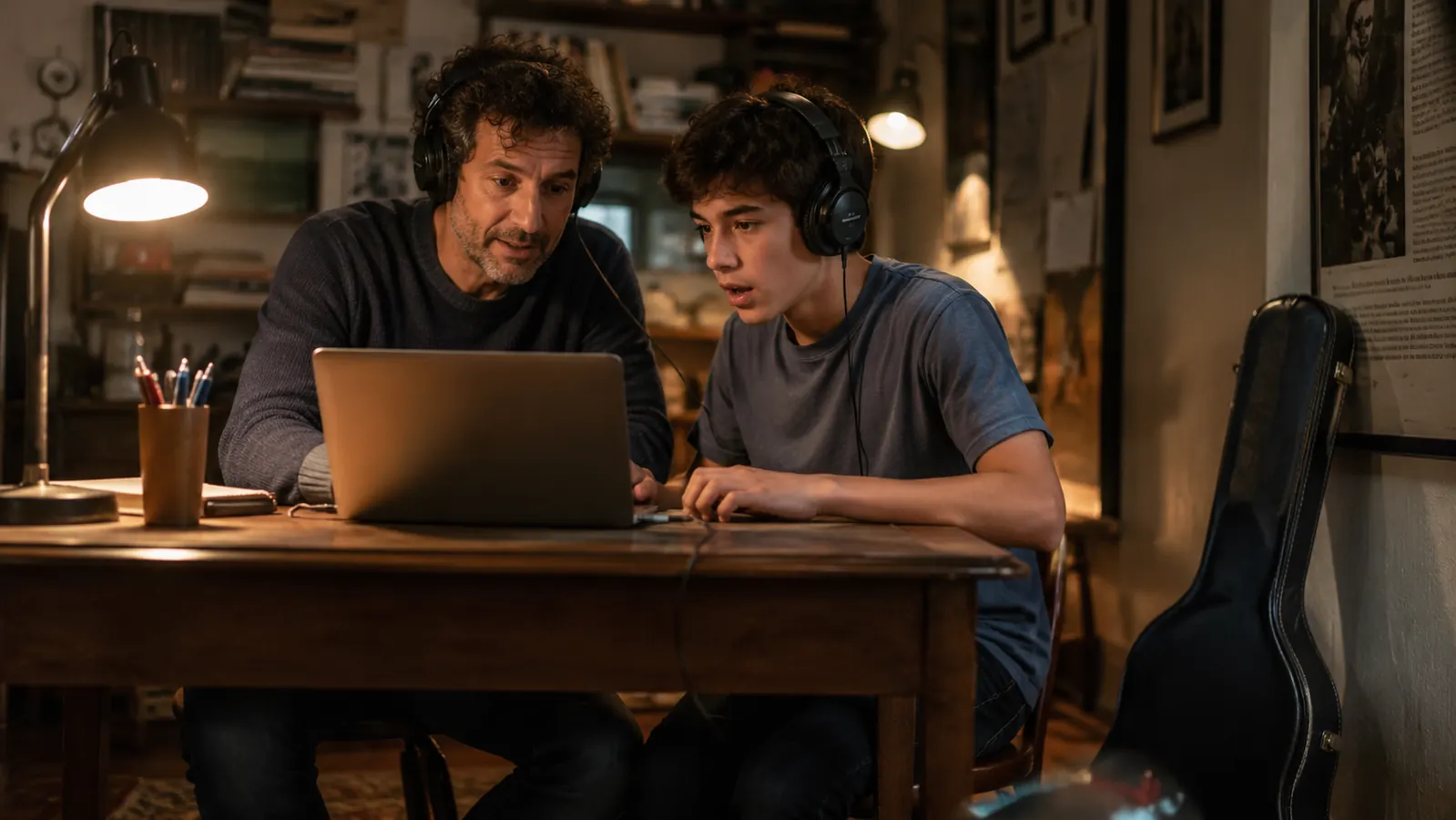
Two weeks later he walked in with his own Scarlett Solo and a used microphone his dad had found. We spent that whole lesson just getting the levels right, and I watched him do what everyone does the first time: record something, play it back, wince at the first honest sound of himself, and immediately hit record again to try it better.
That is the habit that matters most, the habit of listening back. It is also, after years of teaching, nearly impossible to start on loose equipment. A phone recording lies just enough to let a student keep believing the good version of himself. The first time a kid hears his own sound clean and full, something changes in how he practices. That is why the Focusrite sits on my desk, and why I keep sending students home with the same setup.
Marcus played a real show at the end of that summer, twenty minutes of covers on a patio downtown. He was nervous, everyone is. But he had done something most players twice his age never do. He had thirty recordings of himself on his laptop and could tell you, unasked, what was wrong with each one. His fills finally landed, because he had heard them land late so many times that his hands simply corrected the habit. That is what ready looks like. It has almost nothing to do with talent, and everything to do with listening.
What I'd Tell You If We Were Sitting at My Kitchen Table
So here is my advice, plain as I can give it. Before you buy a better amp, before you buy a single pedal, before you worry about pickups, buy something that lets you hear what you actually play. It does not have to be this exact box, but it needs to be honest and easy, because you will not record yourself if the setup takes twenty minutes each time. If you want the version I trust, the one I have taught through for a year now, the Focusrite Scarlett Solo is the one I hand students first. Not because it is flashy. Because it is the box that got Marcus to hear himself, and it has done the same for every student since.
Start small. A microphone, an interface, a laptop you already own. Record one thing this week that you know cold, and listen to it twice. The first listen is the hard one. The second is when you start hearing what you could fix. Marcus still records himself before every gig, and he is seventeen and plays better than half the adults I know.
Ready to Actually Hear Yourself Play?
The Focusrite Scarlett Solo is the compact interface I use in lessons and recommend to every student who is serious about listening back to what they play.
Amazon Check Today's Price on Amazon →