

I'm Curtis Langley, and I've been teaching guitar for 21 years. The Fender CD-60S is the guitar I have bought more times than any other, and there are three of them in my studio right now. That's exactly why this is an honest review and not another glossy product page. Across hundreds of lessons I have watched what entry-level dreadnoughts actually do to a beginner's hands and motivation, and no guitar has taught me more about the gap between the spec sheet and the real workbench than this one. So here is the part the bullets leave out: how the all-mahogany CD-60S sounds when it isn't showing off, how the finish wears in daily teaching use, and which students I quietly steer somewhere else.
How I ended up with three matters, because it's my sample. The first CD-60S was a rescue: a new student brought in a starter box that wouldn't stay in tune past the second fret, nobody can learn on that, so I handed her my personal guitar and ordered myself a replacement. The second was a lesson loaner, a backup so no student ever waits on a repair in my studio. The third was bought after a 14-year-old dropped guitar two off a music stand, and Fender's warranty had it back on the wall inside a week. Three guitars, three years, daily play in lessons and practice, and that is the honest sample this review is built on. If you want the day-by-day picture from the teaching side, my long-term review of the CD-60S on this site covers eighteen months of daily studio use; this piece is the flaws-first version, the conversation everyone has after the honeymoon.
The Quick Verdict
Genuinely worth buying if you accept three truths: it arrives needing a setup, it has no electronics, and it gets better the longer you own it.
Amazon Check Today's Price →If Your First Guitar Feels Like a Fight, This One Isn't
The solid mahogany top and the comfortable neck are why I have bought this guitar three times for my studio. Check today's price on Amazon, then read the honest part below.
Amazon Check Today's Price on Amazon →How I've Used It
With three copies of the same guitar working different jobs, it becomes easy to tell what the instrument does from what I did to it. Guitar one lives on a stand by my desk, played most days for teaching demos and my own practice, maybe ninety minutes a session on the heavy weeks. Guitar two is the designated lesson loaner, handled by kids who don't know their own strength: dropped, leaned on, tuned like it owes them money, and it has never failed a single lesson. Guitar three stays in its case between Saturday recitals, and it's the one I hand to a nervous adult on their first visit, because it's the easiest to play of the three.
That spread matters because it does the long-term test for me, and I don't have to wait years for one guitar to age. Let me also be clear about the construction, because it explains everything that follows. The CD-60S's back and sides are laminate mahogany, so nobody should sell you this as an all-solid guitar in its class. What you're actually buying is a solid mahogany top on a laminate body, which is the right trade at this level, and the guitar behaves exactly like that trade. The solid top carries the voice, the laminate body keeps it tough and affordable. Hold that distinction in your head and every strength and flaw below follows from it.
The other thing three years has taught me: the CD-60S rewards a little shop time. I keep nut files and a spare bone saddle in the back room, and every one of my three needed about twenty minutes of bench work before I would hand it to a student. That is not a deal-breaker, it's just the truth, and it's the center of the honest conversation below.
What Nobody Mentions: The Factory Setup
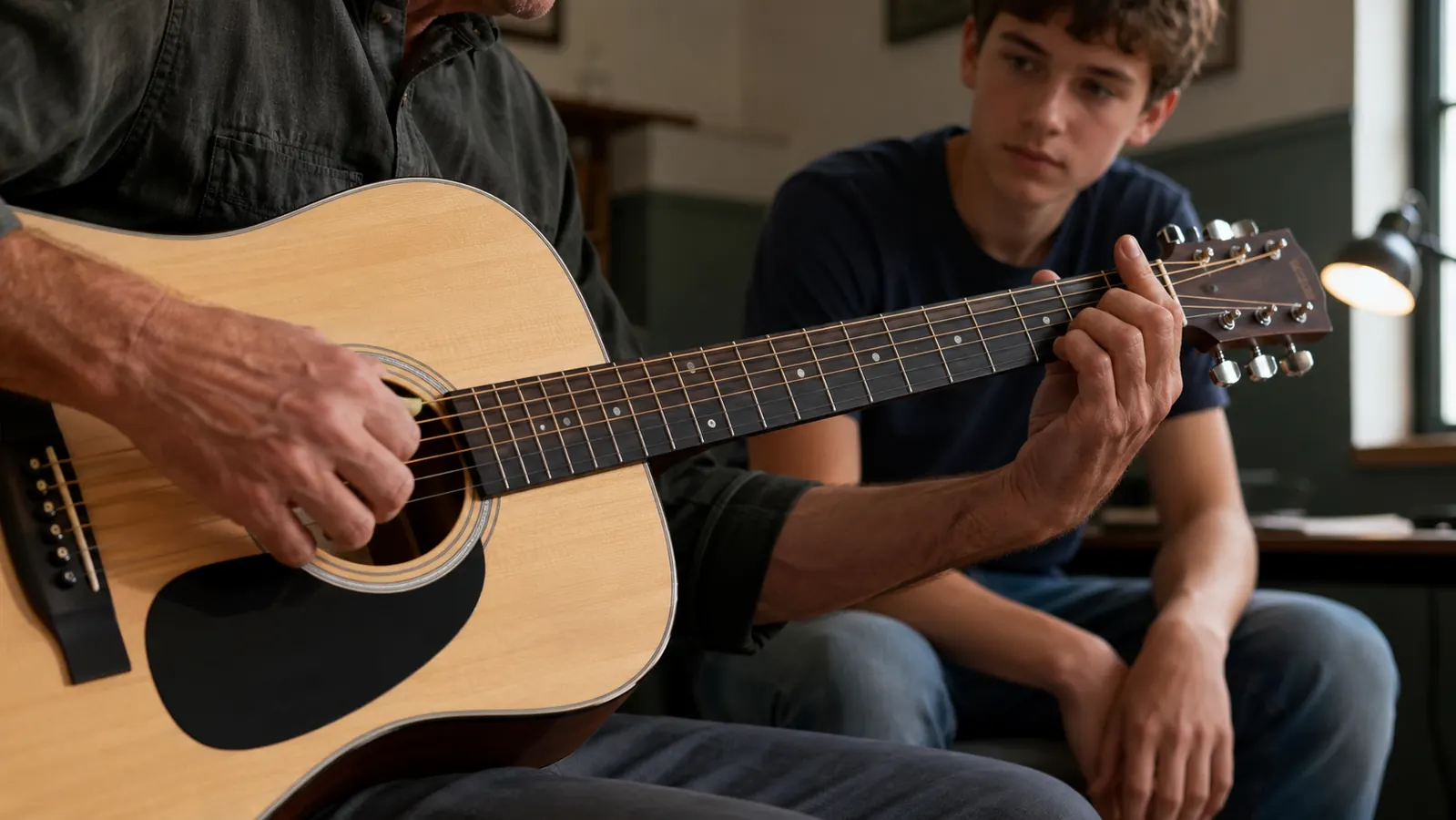
The honest review starts with the setup, because it's the first wall a beginner hits and the one thing no advertisement ever mentions. All three of my CD-60S guitars shipped with the nut slots cut a touch high, which meant the high E string sat proud at the first fret and played sharp until each guitar settled in. For a teacher that's twenty minutes with a set of nut files on a workbench. For a brand-new player it's the difference between a clean note and a dead one, between progress and giving up, and no kid should ever have to diagnose their own high nut slot. Plan for a setup the same way you plan for a spare set of strings, and this guitar never leaves you stranded.
The tuners are the quieter news. They're sealed units, they hold a chord change better than most hardware in this class, and after three years of daily use guitar one still tunes up clean and fast. They are not premium parts. Guitar two's low-E post developed a whisper of play after a year of being swung sideways by small hands, which no tuner on the planet survives, and one screwdriver turn tightened it right back up. I'll take them over open-gear tuners on guitars costing several times more that slip whenever the weather changes.
The satin finish is the third confession. It shows honest wear almost immediately. Pick scratches appear on the lower bout inside a month of real practicing, and the back of the neck turns glossy where a thumb has rubbed for a year. I love it, a guitar that proves it's been played. If you want a showroom-clean instrument you can photograph, this satin all-mahogany is the wrong finish, and you will spend the first year fighting your own guitar instead of playing it.
Tone: What the All-Mahogany Gives You and Costs You
The voice is the reason to buy this guitar and also the reason to skip it, so let me be plain. Mahogany tops are warm, dry, and fast. They flatter a strummed chord, they sit beautifully under a human voice, and they never sound harsh in a small room. They are not bright. If the sound living in your head is a sparkling spruce dreadnought, the all-mahogany will read as mellow, almost muffled, until your ear adjusts. My students playing folk, blues, and singer-songwriter material light up the first time they hear it. The teenager chasing a rock radio sound calls it boring, and for them I reach for the spruce guitar on the other wall.
For fingerstyle it's honest but not lush. Note-to-note separation is good enough for teaching Travis picking, but it won't match all-solid instruments at several times the money, and the laminate back means less reflected bloom behind your playing. For strumming and flatpicking it punches well above its weight, and the dreadnought size gives it a genuine bottom end. For the beginner who mostly wants to sing along and sound warm rather than harsh, it is close to ideal. And close to ideal is exactly the right thing to be at this level.
Solid mahogany tops open up with age, and I heard it in my own guitar from month one to month twelve. Laminate tops sound the same at year one and year five. That is the whole reason to buy this one.
The Long Game: How Three of Them Held Up
Solid mahogany tops open up over the first year or two, loosening into a thicker, rounder, more responsive voice, and guitar one was plainly richer at the twelve-month mark than the day it came out of the shipping box. That is the single biggest reason I steer students toward any solid-top guitar at all. Laminate tops sound the same on day one and day five hundred. Solid tops get better, which means a guitar you buy for a teenager is still earning its keep ten years later, when that teenager is an adult and knows how lucky that first instrument was.
Playability is where this guitar wins lessons. The neck is a comfortable C profile that fits small adult hands and large ones, and the nut width sits in the middle range that works for nearly everyone. The honest caveat is the body. A dreadnought is a big box with a big bottom end, and a nine-year-old will fight it for the first six months. This is a guitar for older kids through adults, and I steer my smaller students to a three-quarter-size instrument without a second thought. Sit with it, which good beginner lessons teach anyway, and the size stops mattering.
Intonation and tuning stability have been excellent on all three copies, the boring test that matters most. Fretted notes sit in tune up the neck, the nut doesn't bind, and a guitar that hangs on a wall stand all week is still in tune on Monday morning. A guitar that drifts every five minutes convinces a beginner they can't play, and I have retired more instruments for that single sin than for any crack or dent. On my wall, the CD-60S simply never plays that trick.
Alternatives I Considered Before Recommending
An honest review has to name the competition. At this level the Yamaha FG800 is the CD-60S's main rival, a spruce-topped dreadnought with a huge following, and I teach on both. The short version: Yamaha's build consistency edges Fender out of the box on average, and its bright voice suits a different player. Fender's mahogany warmth, its comfortable neck, and a warranty program that put a student's dropped guitar back on the wall within a week are why my studio wall leans the way it does. The full head-to-head lives in the comparison article on this site.
The Epiphone DR-100 and a couple of Ibanez budget dreadnoughts also come up when parents are watching every dollar, and they are decent instruments that would not embarrass anyone. The reason I keep coming back to the CD-60S is a single spec: the solid top. At the entry level, a solid mahogany top is the upgrade that actually changes what a player hears across years, and it is the one thing I refuse to give up when a parent asks whether we can go cheaper. Cheaper exists. Cheaper that carries a kid into year two, I have seen fewer.
What You'll Want Alongside It
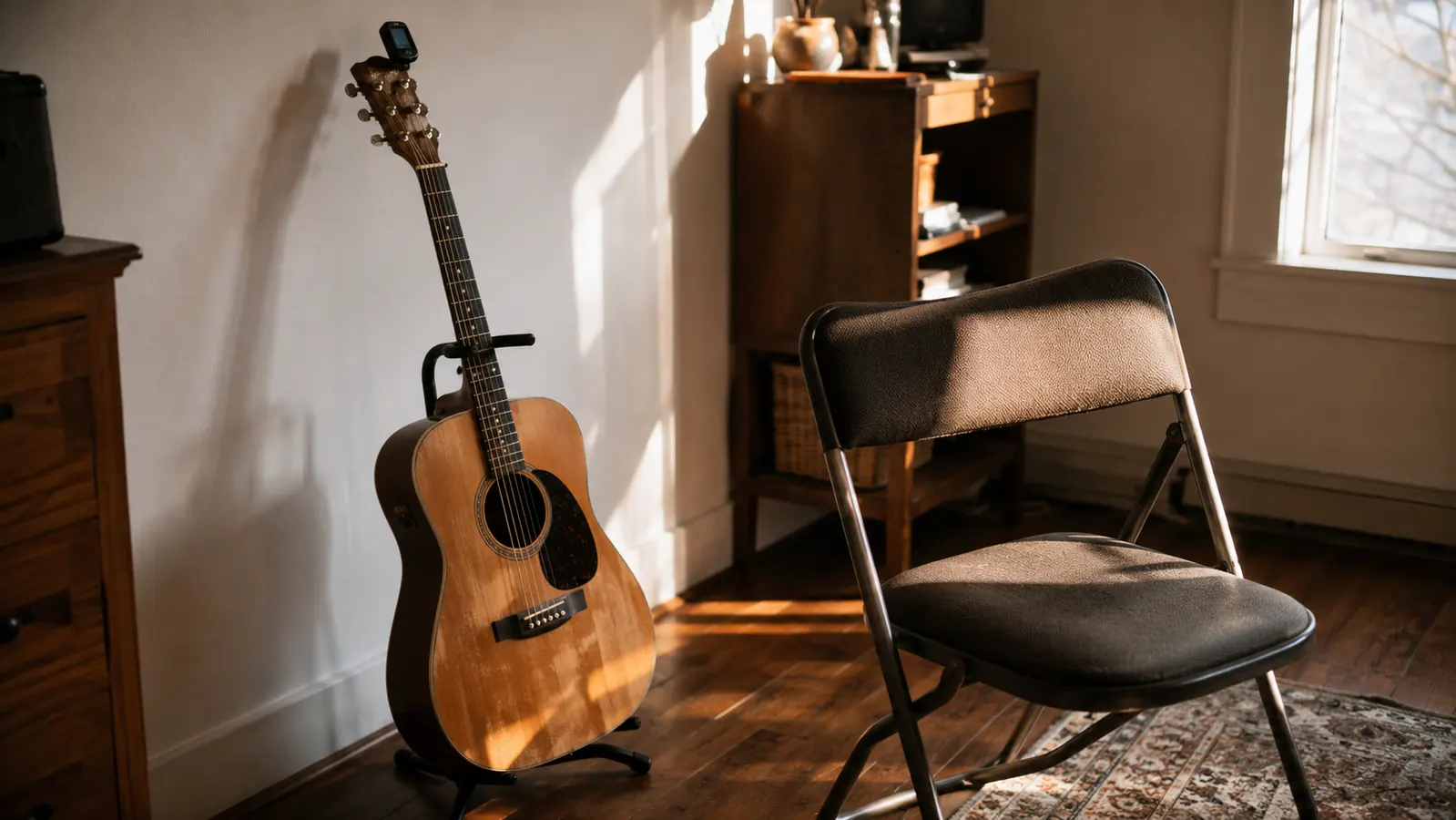
This is the part the box doesn't tell you. The CD-60S arrives as bare as a guitar can arrive, so plan the small stuff before it lands. A wall stand or a floor stand, because a guitar that lives in a case doesn't get played. A spare set of light strings, a clip-on tuner, and a lesson or two on how to restring it, because fresh strings are the cheapest upgrade in all of music. And the setup we talked about, from a local shop or a patient friend who knows which end of a nut file is which.
None of this is special pleading. It's the same list I hand every family that buys a first guitar from me, and skipping it is why most starter guitars die in a closet by spring. Buy the guitar, budget for the small stuff, and the CD-60S will be the boring, reliable friend of your practice room for years, the one you stop noticing because it simply works.
What I Liked
- Solid mahogany top that opens up and improves with age
- Comfortable C-profile neck and reliable tuning
- Warm voice that flatters folk, blues, and singing
- Survived drops, loaner duty, and daily lessons
- Fender's two-year warranty covered a real repair for me
Where It Falls Short
- Arrives needing a setup; all three of mine shipped with high nut slots
- Laminate back and sides cap the projection and bloom
- No electronics; you add a pickup or a microphone to perform
- Satin finish shows pick and thumb wear quickly
- Dreadnought body is too big for smaller players
Who This Is For
The CD-60S is for the beginner or the parent of an older kid who wants one guitar that carries through the first few years without a second purchase. It's for the adult who wants a warm, forgiving acoustic for the couch and the campfire, and for the singer-songwriter who needs an instrument that stays in tune while they work out a verse in front of the piano. If you will spend twenty minutes or a modest shop fee on a setup, this guitar returns that investment for years. And if you want the full workbook on sizing, setup checks, and everything else that matters when choosing a first guitar, my step-by-step guide on this site walks the whole thing through.
Who Should Skip It
Skip the CD-60S if you need electronics the day it arrives, because this is a pure acoustic and you will be adding a pickup or buying a microphone on top of it. Skip it if the sound in your head is bright and sparkling, because mahogany will not get there. Skip it if you would rather a store hand you a perfectly set-up instrument with zero homework, because you will either pay for a setup or do one yourself. And skip it for anyone under about ten, because the dreadnought body will fight small hands no matter how patient the music is. For those players I reach for a spruce-topped three-quarter or a smaller concert body, and getting the right shape the first time is cheaper than forcing a love of the wrong one.
The Guitar I Buy Three at a Time
A solid mahogany top, a neck beginners trust, and a warranty program that came through for me in a real week. If you're buying a first acoustic, this is the one I would hand you. Check today's price on Amazon.
Amazon Check Today's Price on Amazon →